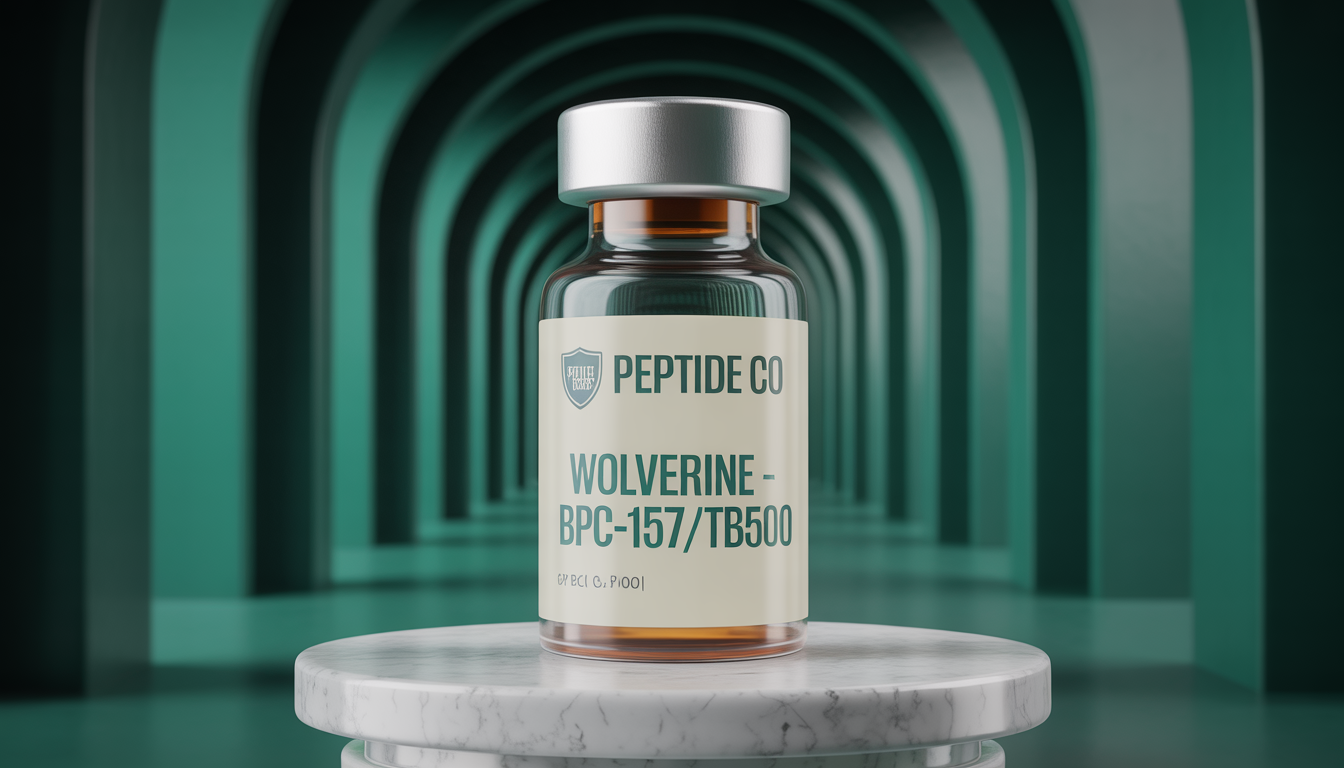
Wolverine - BPC157/TB500 Hybrid
The Wolverine Stack is a pre-mixed peptide blend combining BPC-157 (Body Protection Compound-157) and TB-500 (Thymosin Beta-4), the two most popular healing and tissue repair peptides in research. Named after the Marvel character known for his rapid healing abilities, this stack pairs two complementary mechanisms in a single vial for convenience and synergistic effect. BPC-157 promotes tissue regeneration, vascular formation, and gut healing, while TB-500 supports cell migration, angiogenesis, and systemic recovery. Together they target injury repair, tendon and ligament healing, joint support, and overall recovery from a comprehensive range of mechanisms. The pre-blended format eliminates the need for separate vial reconstitution and provides consistent dosing of both peptides in every injection.
The Wolverine Stack works through two complementary mechanisms operating simultaneously. BPC-157, a synthetic pentadecapeptide derived from a protective protein found in human gastric juice, promotes angiogenesis (formation of new blood vessels), upregulates growth hormone receptors in injured tissue, accelerates tendon-to-bone healing, and supports nitric oxide production for improved vascular function. It also has notable effects on gut healing, mucosal protection, and dopaminergic and serotonergic system modulation. TB-500, a synthetic version of the active region of Thymosin Beta-4, primarily regulates actin sequestration and promotes cellular migration, allowing repair cells to travel to injury sites. It supports angiogenesis through a different pathway than BPC-157, reduces inflammation, and accelerates wound healing across multiple tissue types. The combination delivers vascular repair, cellular migration, growth factor upregulation, and inflammation reduction simultaneously, addressing nearly every aspect of the tissue repair cascade.
- Synergistic combination of two complementary healing peptides
- Convenient pre-blended format eliminates need for multiple vials
- Accelerates recovery from soft tissue injuries
- Promotes tendon, ligament, and muscle repair
- Supports joint health and reduces joint discomfort
- Enhances angiogenesis through dual mechanisms
- Reduces inflammation throughout the body
- Improves gut barrier integrity and mucosal healing
- Supports recovery from training-induced microtrauma
- Accelerates wound healing and tissue regeneration
- Researched for both acute injury and chronic recovery applications
- Single injection delivers both peptides at consistent ratios
- Injection site redness, swelling, or irritation
- Mild localized soreness at injection site
- Possible transient flushing or warmth following administration
- Mild fatigue or lethargy reported by some users in early protocol
- Possible dizziness or lightheadedness shortly after injection
- Generally considered to have a favorable side effect profile
- Theoretical concerns regarding cellular proliferation with long-term use
- Not recommended during active malignancy due to angiogenic effects
- Not approved for human use; sold strictly for research purposes
- Long-term safety profile in humans has not been fully established
- Consult a qualified medical professional before any use
The most popular peptide combination in injury recovery research Synergistic mechanisms cover multiple stages of the healing cascade Pairs with GHK-Cu for enhanced connective tissue and skin repair Stacks with KPV for comprehensive anti-inflammatory and gut healing protocols Complements CJC-1295 / Ipamorelin for combined recovery and growth research Often used alongside MGF or PEG-MGF in muscle injury recovery Pairs with Pentosan Polysulfate for joint-focused research protocols Typical research dosing: 250 mcg BPC-157 + 500 mcg TB-500 daily Some protocols use higher doses during acute injury phases Loading phase often uses daily injections for 4 to 6 weeks Maintenance phase typically reduces to 2 to 3 injections per week Site-specific injection near injury area common but not required Reconstitute with bacteriostatic water; refrigerate after mixing Use within 2 to 3 weeks of reconstitution for peptide stability Effects often noticeable within 1 to 2 weeks for acute injuries Chronic conditions may require 6 to 12 weeks for full benefit assessment
Select your preferred supplier and add to cart. Prices shown include VAT.
| Supplier / Lab | Strength / Volume | Price | Availability | |
|---|---|---|---|---|
|
UP
UPA Labs
Australia
|
5mg/5mg
1 Vial
|
R520
|
In Stock | |
|
VM
VMed
South Africa
|
5mg
1 x 10ml Vial
|
R1,150
|
In Stock |