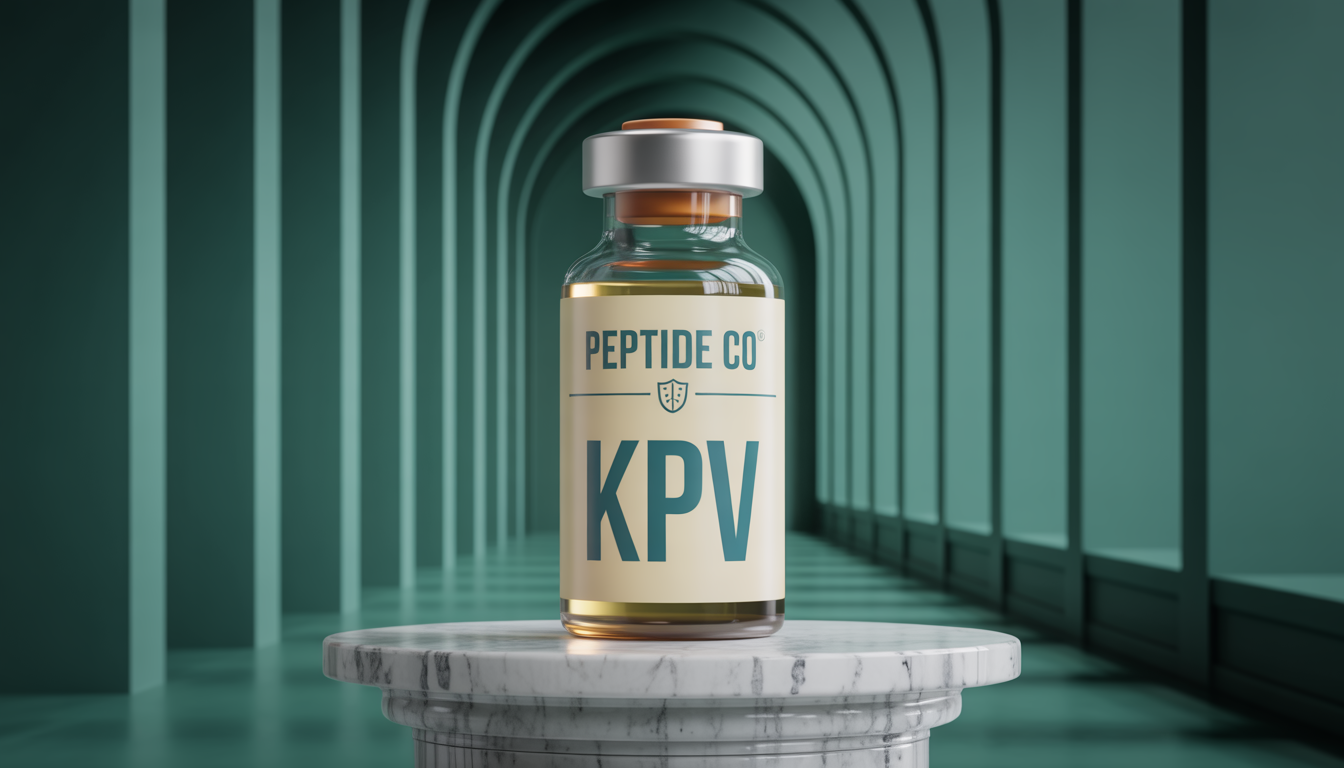
KPV
KPV is a synthetic tripeptide consisting of three amino acids — lysine, proline, and valine — corresponding to the C-terminal sequence of alpha-melanocyte-stimulating hormone (α-MSH). Despite its small size, KPV retains many of the potent anti-inflammatory and immunomodulatory effects of the parent hormone while lacking the pigmentation effects of full-length α-MSH. It is researched extensively for inflammatory bowel conditions, skin disorders, wound healing, and general inflammation modulation. KPV's small molecular size allows it to penetrate cells directly and act intracellularly, making it effective through multiple administration routes including subcutaneous injection, oral, and topical application.
KPV exerts its anti-inflammatory effects through multiple intracellular pathways rather than through traditional cell-surface receptor binding. The tripeptide enters cells directly and inhibits the NF-κB signaling pathway, a master regulator of inflammatory gene expression. By suppressing NF-κB activation, KPV reduces the production of pro-inflammatory cytokines including TNF-α, IL-1β, IL-6, and IFN-γ. It also inhibits inflammatory cell migration and reduces neutrophil infiltration in inflamed tissues. In the gut, KPV is taken up by intestinal epithelial cells and immune cells through the PEPT1 transporter, where it directly suppresses inflammation in the mucosal layer. KPV also demonstrates antimicrobial activity against bacteria, fungi, and yeast, contributing to its effects on skin and gut health. Unlike many anti-inflammatory peptides that target single pathways, KPV's mechanism is broad-spectrum while remaining selective for inflammatory processes.
- Potent anti-inflammatory effects through NF-kB pathway inhibition
- Suppresses production of multiple pro-inflammatory cytokines
- Researched extensively for inflammatory bowel disease applications
- Supports gut barrier integrity and intestinal healing
- Demonstrates antimicrobial activity against bacteria, fungi, and yeast
- Effective through multiple administration routes (injection, oral, topical)
- Small molecular size allows direct cellular penetration
- Supports skin healing in conditions like psoriasis and dermatitis
- Promotes wound healing and tissue repair
- Does not cause pigmentation effects unlike parent hormone alpha-MSH
- Generally well-tolerated with favorable side effect profile
- Compatible with other recovery and gut health protocols
- Injection site redness, swelling, or irritation
- Generally well-tolerated with minimal side effects reported in research
- Possible mild gastrointestinal effects with oral administration
- Possible mild skin irritation with topical application
- Limited human safety data; most research is preclinical
- Theoretical concerns regarding long-term immune modulation
- Not recommended during active infection without medical supervision
- Not approved for human use; sold strictly for research purposes
- Long-term safety profile in humans has not been fully established
- Consult a qualified medical professional before any use
Pairs synergistically with BPC-157 for comprehensive gut healing protocols Stacks with TB-500 for systemic anti-inflammatory and recovery research Complements Larazotide or other gut barrier peptides in IBD research Often combined with GHK-Cu in skin health and wound healing protocols Pairs with Thymosin Alpha-1 for combined immune modulation research Effective via multiple routes: subcutaneous, oral, topical, or intranasal Oral administration shown effective for gut-specific research applications Topical application researched for psoriasis, eczema, and skin irritation Typical research dosing: 250 to 1000 mcg daily, depending on application Gut-focused protocols often use oral KPV at 500 mcg, 1 to 2 times daily Skin protocols typically use topical compounded creams or gels Reconstitute with bacteriostatic water; refrigerate after mixing Use within 2 to 3 weeks of reconstitution for peptide stability Generally suitable for extended research cycles due to favorable safety profile
Select your preferred supplier and add to cart. Prices shown include VAT.
| Supplier / Lab | Strength / Volume | Price | Availability | |
|---|---|---|---|---|
|
UP
UPA Labs
Australia
|
10mg
1 Vial
|
R360
|
In Stock | |
|
VM
VMed
South Africa
|
15mg
1 Vial
|
R900
|
In Stock |